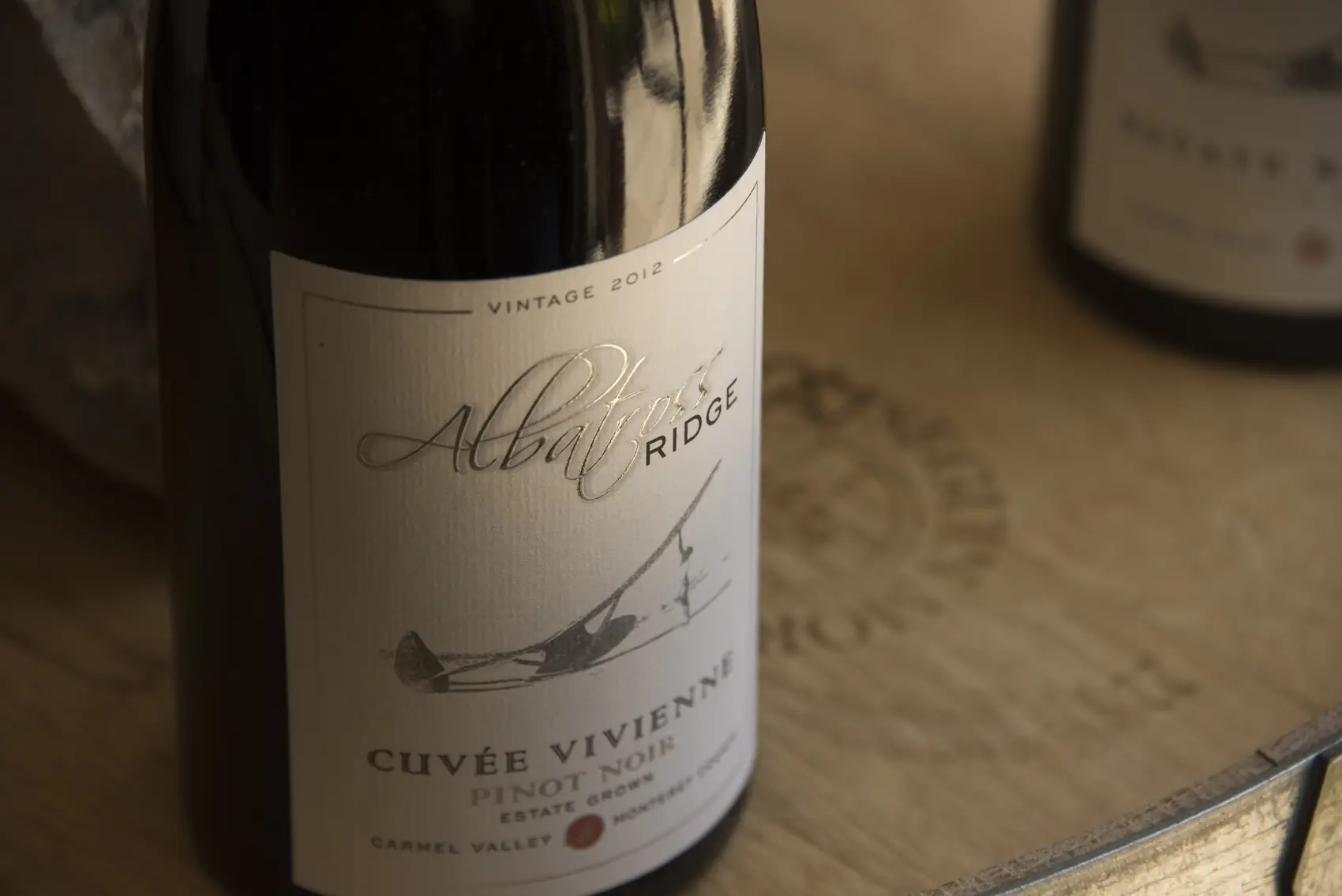
The Wines
Two grapes, and everything one ridge can make of them.
A handful of wines, gently made.
Albatross Ridge makes just a handful of wines, with an exclusive focus on Chardonnay and Pinot Noir, as well as small amounts of pétillant naturel rosé.
Gently made with a minimalist approach, they have established themselves as cool-climate Central Coast benchmarks, recognized for their beautiful structure and pure varietal flavors.
The Carmel Coast
This stretch of coast is not the valley.
When Carmel Valley was approved as an appellation in 1983, the focus was Cabernet in the warm canyons running southeast, away from the cold water. That is a different place from this one.
The hillsides closest to the sea are steep, exposed, and cooled all year by wind coming straight off the Pacific. They sit less than ten miles from the water and just outside the north-west boundary of that appellation. Around ninety acres of Pinot Noir and Chardonnay grow on them now, ours among them. That ground is what our label calls the Carmel Coast.
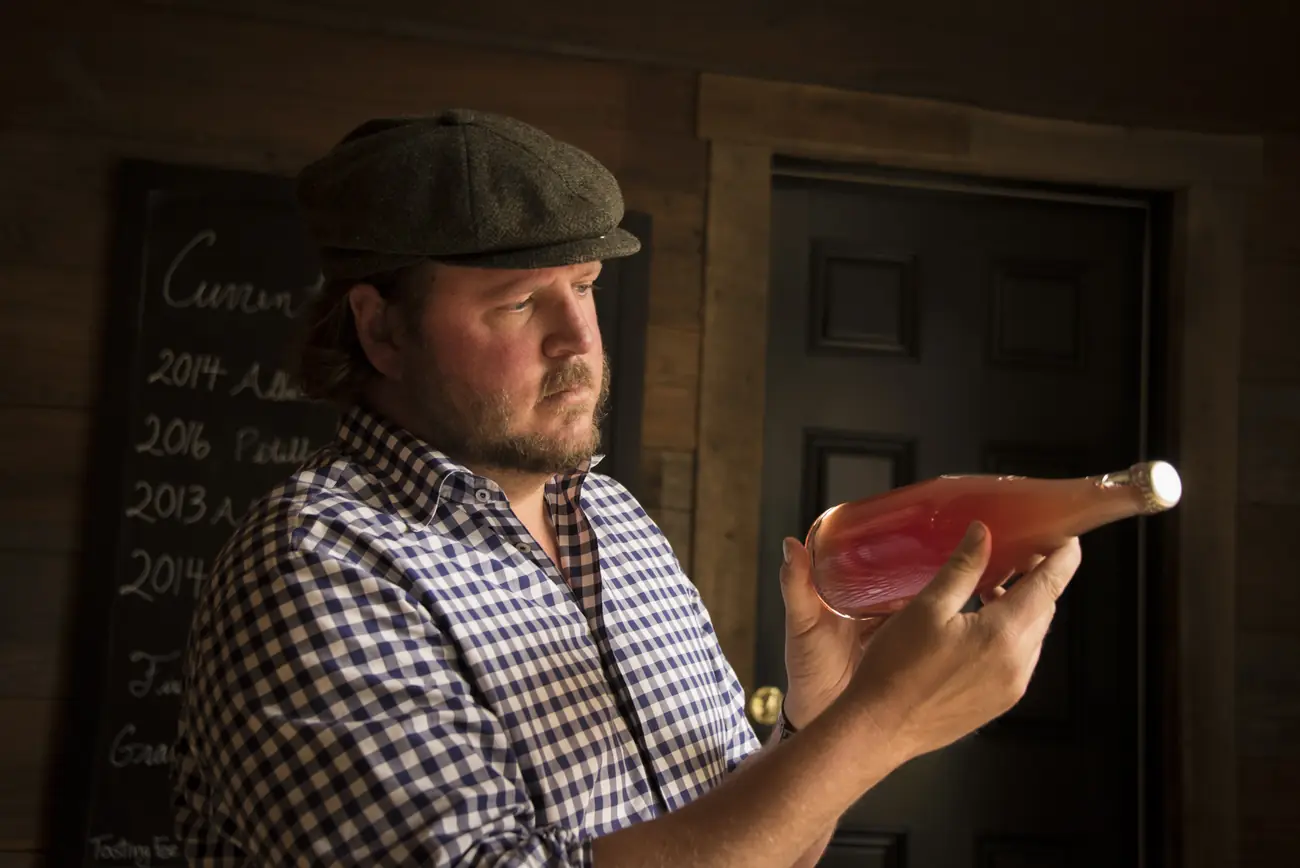
The Cellar
Small lots, native yeast, and as little handling as possible.
Everything here is fermented in small lots on native yeast and moved as little as it can be. Picking early is what makes that possible. At lower Brix the ferments run clean, and there is acidity to build on rather than acid to correct.
Beyond that, the two grapes are treated quite differently.
Pinot Noir
About a dozen individual fermentations each vintage, some as small as half a ton, all of it to make just two Pinot Noirs. Whole clusters go in block by block, which lifts the fresh-cut rose aromatics.
Because the fruit comes in at lower Brix, Garrett will often do two or three punch downs a day to build body and color. Free-run wine is kept apart from press wine, and the blends are almost entirely free run, occasionally with a very small share of press added as a spicy note.
Roughly seventy percent destemmed whole berry to thirty percent whole cluster, fermented long and cool, twenty-one days below 88°F in one-and-a-half-ton open-top tanks.
Twelve months in barrel with no racking, then bottled unfined and unfiltered.
Chardonnay
Barrel fermented sur lie on native yeast, with minimal stirring, enough contact to build texture, not so much that it turns creamy.
Picking early means a very light press, 55 to 60 cases per ton, to keep any green flavor from the stems and seeds out of the wine entirely.
New oak stays below 25%, all of it extra tight grain. Garrett particularly likes one-year-old barrels, for the way they frame the fruit rather than sit on top of it.
across seven bottlings
to make just two Pinot Noirs
lot fermented on its own
earlier than most
What the Wine Is Raised In
Oak is used judiciously and always extra tight grain, but it belongs mostly to the Pinot Noir and the other reds. For the Chardonnays the question is more open, and Garrett answers it differently in every bottling.
The Estate Chardonnay sits between the two, half barrel, half concrete, both fermented sur lees with no stirring and no racking, and a full native malolactic.
In the Press
2014 Estate Reserve Pinot Noir
2015 Estate Chardonnay
2018 Estate Chardonnay
Well known, highly reputed
“One of the most dramatic vineyards I’ve ever seen.” Matt Kettmann, Wine Enthusiast
“Garrett Bowlus is interested in producing wines that show richness and complexity while remaining light and sophisticated, and he’s consistently hitting the mark.” Rich Cook, Wine Review Online
“Superbly elegant, the wine is vivid and pure tasting, with waves of sophisticated earthy flavors. If you like your pinots to be exquisite, intriguing, and artisanal, this is for you.” Karen MacNeil, WineSpeed
“Lemon curd, flowers, and mineral, all carried on a frame more lithe than the denser nose implies.” Brian Freedman, Forbes
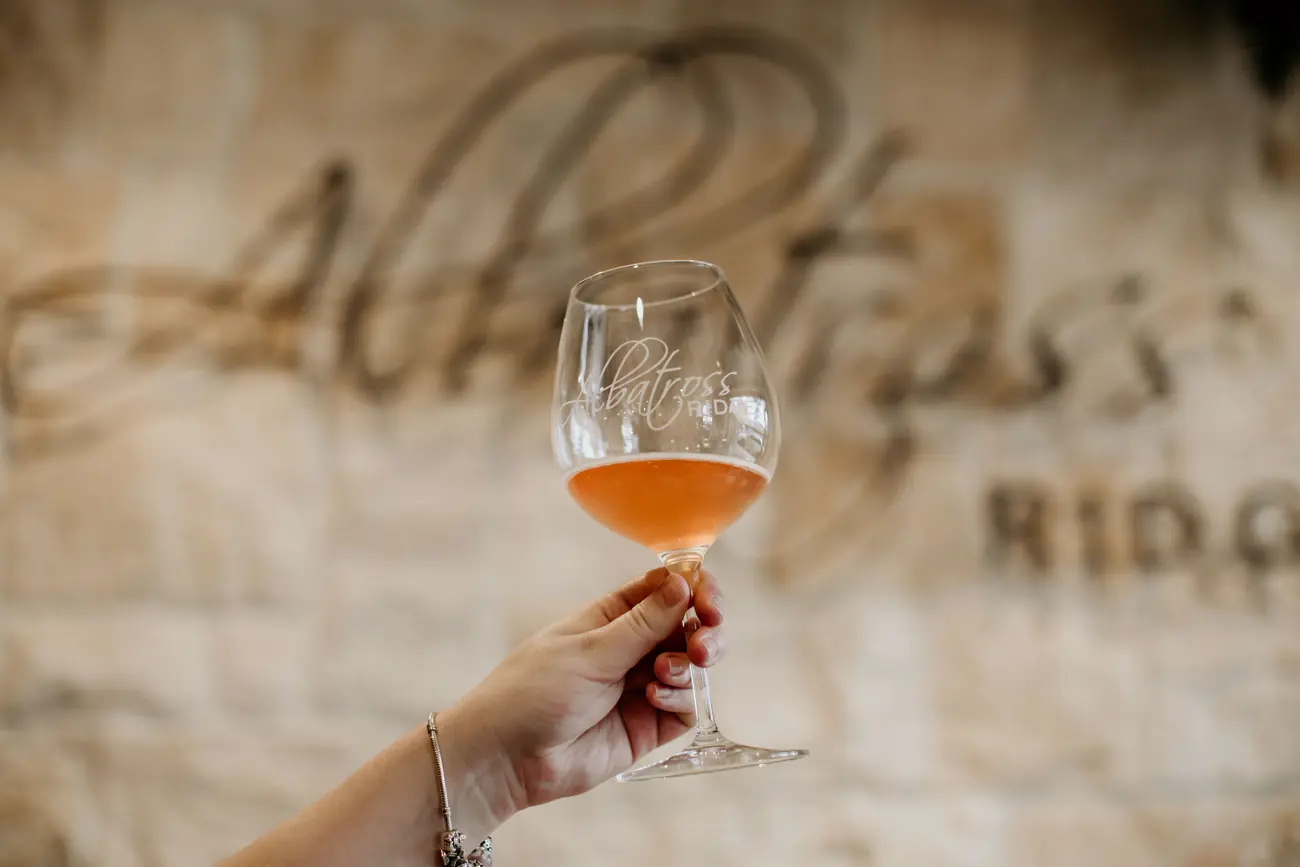
Rosé
Three ways to make a rosé.
The same instinct each time: pick early, keep the tension, let the fruit read as freshness rather than sweetness. From there the three go their separate ways, and end up about as different as three wines from one idea can be.
Flat
The straightforward one. Dry, still, picked for acidity rather than color, and the version most people meet first.
Pale and bone-dry, all wild strawberry and citrus peel, the bottle for oysters on the wharf or the first warm afternoon of the year.
Pétillant Naturel
Bottled while it is still fermenting, so the bubble is the wine finishing its own work rather than anything added to it.
Garrett was among the first on this coast to make one, and it has had a following here ever since.
A soft, cloudy sparkle with orchard fruit and a trace of rising bread, made for fried chicken, soft cheese, and afternoons that turn into evenings.
Méthode Champenoise
The long way round, and the newest wine in the cellar, a second fermentation in the bottle, then time on the lees before it is ready to say anything.
Fine bubbles, bright acidity, and a warm, toasted-bread richness that only patience can give. Poured for anniversaries, engagements, and Sunday lunches that deserve better.
Beyond the Ridge
Some grapes will never ripen at 1,250 feet in the fog. So we go and find them.
The fog and elevation that suit our Pinot Noir and Chardonnay vines will not ripen Cabernet or other varietals, and never will. For the wines the estate cannot grow, we seek out fruit, single sourced, from small growers who tend their ground with the same patient, unhurried hand we do.
This has meant Cabernet Franc from the Santa Cruz Mountains, Syrah and Sauvignon Blanc, alongside a Cabernet Sauvignon from old vines at Joullian Vineyard, deep in the rugged Cachagua Mountains, of Carmel Valley.
The list moves from year to year. It depends on what a season gave a particular grower on a particular site, which is rather the point of sourcing this way at all.
Taste them in order. The full range is poured in both tasting rooms, and members are served first, and some of these wines never leave the list.
Visit a tasting roomCan’t visit? Shop our wines…
The Cellar
Some wines are gone. None are forgotten.
Every vintage we have grown lives on in our cellar archive: the record of the estate, lineage by lineage, with the scores they earned along the way, up to 95 points from Wine Enthusiast. Library quantities of past vintages occasionally return from the cellar itself.
Explore the CellarStay Up To Date…